İnsuyu Cave: Turkey’s First Tourist Cave
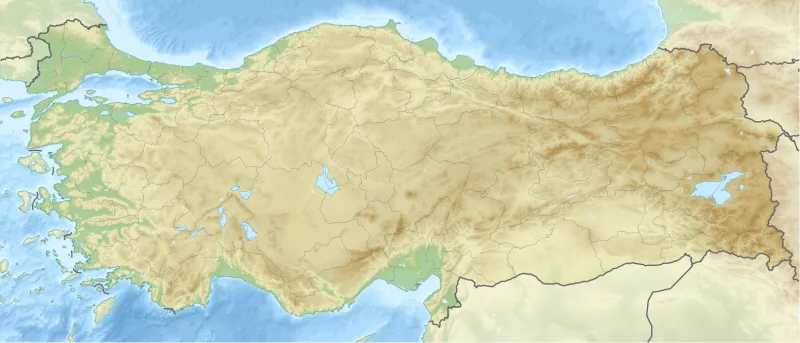
Thirteen kilometers southeast of the city of Burdur, in the foothills of the Western Taurus Mountains, lies İnsuyu Mağarası—a cave that holds several Turkish records. It is the country’s first cave to be officially opened to tourists: as early as 1966, concrete walkways, railings, and lighting were installed here. The cave is known not so much for its stalactites as for its system of underground lakes—there are nine of them, and each has its own name. For many years, the water in these lakes was considered medicinal.
History
Local residents had long known of the cave’s existence in the Çatalağıl Valley—karst sinkholes in this part of Burdur Province were a familiar feature of the landscape. However, the cave was not scientifically discovered until 1952: hydrogeologist Temuçin Aygen, who was conducting exploratory work in the area, surveyed the system and compiled the first detailed description.
In 1966, İnsuyu became Turkey’s first cave to be equipped for mass tourism. This step was part of a national program to develop cave tourism, which Turkey had undertaken earlier than many countries in the region. In 1976, the cave received official status as a protected natural monument.
The late 20th and early 21st centuries proved challenging for İnsuyu. Active well drilling in the Madıma Valley lowered the groundwater level, and the Great Lake lost about 7 meters in depth. By 2014, a number of small bodies of water had dried up. Restoration work began in December of that year, and by the summer of 2015, the water level had partially recovered—the cave is once again open to visitors.
What to See
The tourist section and the stalactite hall
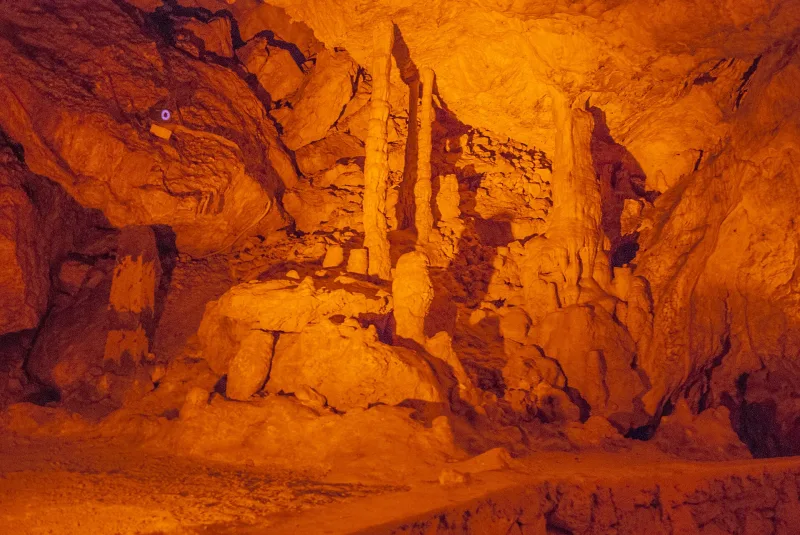
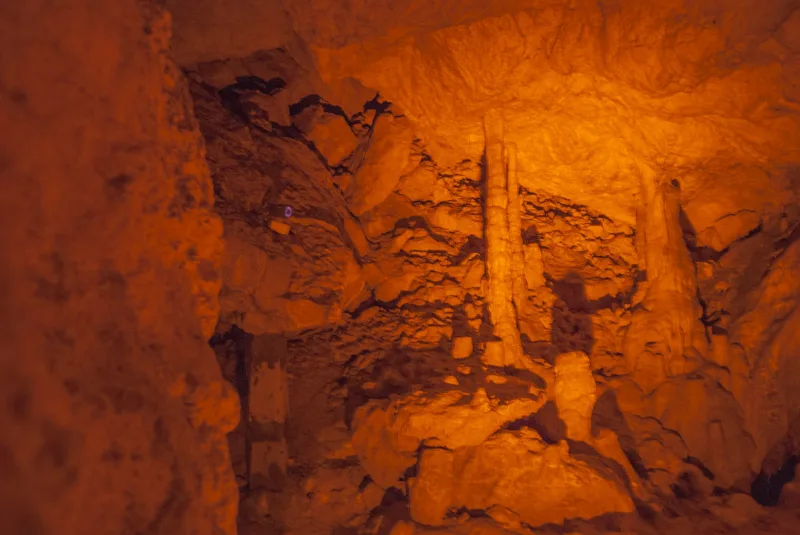
The part of the cave open to visitors stretches for 597 meters, while the total length of the system is estimated at 8,100 meters—most of it remains under the jurisdiction of researchers. Along the tourist route, visitors can see stalactites, stalagmites, columns, curtain-like flowstones, and crystalline calcite formations. The rock’s color ranges from white to light gray, and its texture resembles frozen waterfalls.
Nine Lakes
İnsuyu’s greatest pride is its underground bodies of water. The main route features three large lakes: “Büyük Göl” (Big Lake) with an area of about 512 m², “Dilek Gölü” (Lake of Wishes), and “Gaz Gölü” (Gas Lake). Outside the tourist zone, there are also “Crystal Lake,” “Lake of Hope,” “Lake of Eternity,” and others. The names were given by researchers and local guides, and each body of water truly differs in shape, clarity, and water color.
Properties of the Water
In the past, people drank the water of İnsuyu: it was believed to help with diabetes and stomach ailments. Today, swimming and drinking the water are not recommended, but the water bodies are so clear that the bottom is visible several meters down when illuminated.
Interesting Facts
- İnsuyu is Turkey’s first show cave (tourist cave), opened to the general public as early as 1966. Before that, the country’s caves were visited only by speleologists.
- The total length of the system is 8,100 meters, but only 597 meters are accessible to tourists. Most of the underground galleries continue to be explored by speleologists and hydrogeologists.
- The cave is located at an altitude of 1,230 meters above sea level—making it one of Turkey’s highest-altitude tourist caves.
- In 2014, a number of small lakes nearly dried up completely due to excessive well drilling in the surrounding area. Active measures to restore the water regime yielded results as early as 2015.
- The local name İnsuyu roughly translates to “human water”—locals believed the water had healing properties and used it for drinking for many decades.
How to get there
The cave is located in the province of Burdur, near the village of Çatalağıl. The easiest way to get there from the city of Burdur is by car: 13 km along Highway D-685 toward Antalya, then follow the signs for İnsuyu Mağarası. The drive takes about 20 minutes.
Getting there by public transport is more difficult: there are no direct buses, so you’ll need to take a taxi from Burdur (approximately 200–300 lira one way). The nearest airport is Isparta Süleyman Demirel (about 70 km), and the larger one is Antalya (about 200 km). GPS coordinates of the cave: 37.6594° N, 30.3742° E.
Tips for travelers
Inside the cave, the temperature stays cool year-round at around 13–15 °C—this is noticeably cooler than the outdoor temperature in summer. Bring a warm sweater or windbreaker, especially if you plan to linger by the lakes. Footwear should be non-slip: the concrete paths are covered with condensation and damp in places.
The route is not difficult, but it includes descending and climbing several dozen steps. People with respiratory issues (asthma, allergies to dampness) should assess their condition in advance. A complete tour of the tourist section takes 60–90 minutes, including stops for photos.
The best time to visit is spring and fall. In summer, it can get crowded as tourists leave the hot valley, and in winter, the access road sometimes freezes over. It’s convenient to combine this trip with visits to Sagalassos, Salda Gölü, and the Burdur Archaeological Museum, which houses artifacts from Hacılar—one of Anatolia’s oldest Neolithic settlements.